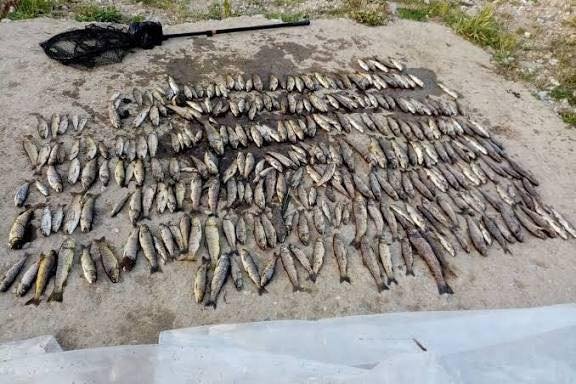
An independent report from the European Commission’s Joint Research Centre has shed new light on Ireland’s largest recorded fish kill, which struck the Blackwater River near Mallow last August, leaving an estimated 42,000 fish dead and raising concern across the region.
The report praises the swift actions of State agencies, including Inland Fisheries Ireland, Cork County Council, and the Environmental Protection Agency, who began investigations within hours of the incident. However, it also points to gaps in coordination, real-time monitoring, and communication that limited the effectiveness of the response.
Although the precise cause and source of the fish kill remain unknown, the report emphasizes the need for continuous monitoring of major rivers, with historical and current water quality data made publicly available. It recommends intensified vigilance in the Blackwater catchment and its tributaries to prevent similar incidents.
The report also calls for a new multi-agency protocol for investigating major fish kills, which would ensure that expertise, resources, and information are quickly aligned and applied consistently. A public communication plan is also recommended to provide timely updates, outline uncertainties, and guide residents and anglers on safety measures.
Minister of State with responsibility for Fisheries and the Marine Timmy Dooley said the recommendations are “practical” and “forward-looking,” with short-term actions already underway. An Inter-Agency Protocol Group has been set up by Inland Fisheries Ireland and is expected to establish a single agreed protocol for fish kill investigations by the end of March 2026.
Longer-term recommendations include improving habitat quality and water flows, enhancing detection technologies, and exploring real-time monitoring for major rivers. Dooley noted that the Department is considering a pilot project in the Blackwater catchment to implement and test these measures, with community involvement as a central focus.
Local stakeholders and angling groups were among the first to report the fish kill last August. The report also reflects their concerns, particularly regarding delays in public communication, a heavy focus on pathological causes, and the lack of safety advisories during the event.
The Blackwater fish kill report provides a roadmap for preventing future environmental crises, underlining the importance of rapid response, multi-agency collaboration, and proactive monitoring to protect one of North Cork’s most important natural resources.